19.03.2026
HHLA TK Estonia terminal first in Europe with battery-powered RTG cranes
HHLA TK Estonia will deploy the first fully battery-powered Rubber‑Tired Gantry (RTG) cranes in Europe that can operate an entire work shift solely on battery power. The cranes, supplied by Konecranes and scheduled for delivery at the end of this year, mark a significant step towards fully electric yard operations and support the terminal’s long-term sustainability strategy.
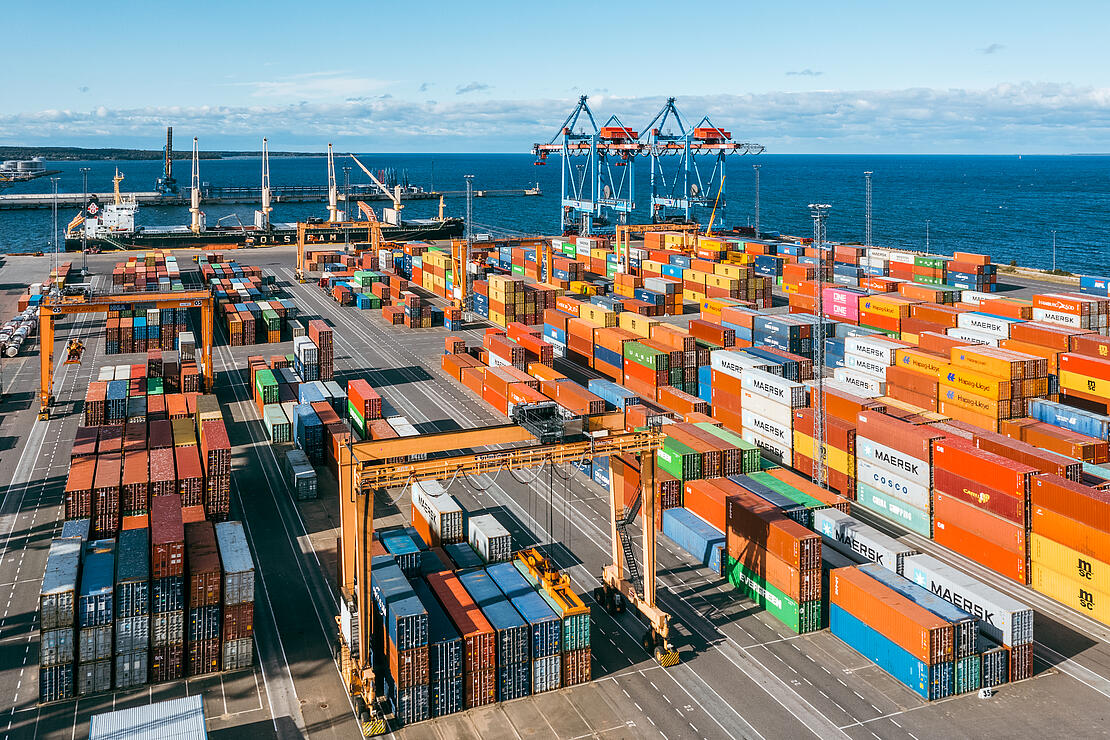
The RTGs will be deployed in the Muuga container yard as part of ongoing investments in more energy‑efficient and environmentally friendly terminal infrastructure. Each crane is equipped with a 296 kWh battery system that provides up to eight hours of independent operation.
Riia Sillave, CEO of HHLA TK Estonia: “Our terminal in Muuga follows a long-term sustainability strategy that we are implementing step by step. This investment marks an important milestone in the development of battery-powered equipment at European container terminals and supports our efforts to modernise operations while further reducing emissions.“
Tanel Ringo, Technology and Infrastructure Manager at HHLA TK Estonia: “Renewing our container yard RTG fleet with these Europe-first Konecranes battery-electric RTGs allows us to further modernize our yard while maintaining operational consistency across the fleet which includes already several equipment from the supplier. Having the manufacturer’s engineering and production located in the same northern climate region is also beneficial when developing equipment for our operating conditions.”
Philipp Reiter, Regional Sales Manager EMEA, Port Solutions, Konecranes: “Close collaboration with a partner just across the Gulf of Finland enables us to move development initiatives quickly into real-world yard performance. This order demonstrates how battery technology is shifting from being a mitigation solution to providing power for full-scale operational use in container terminals.”
This delivery marks the first time RTGs with this level of battery capacity will be introduced in Europe. Unlike traditional diesel-powered cranes, the new equipment can operate entirely on battery power, significantly reducing emissions and noise levels at the terminal. The ability to run for a full shift on battery power also enhances operational resilience, allowing the cranes to continue operating independently of external power sources for extended periods.
Share this page on


