15.12.2025
METRANS launches major green logistics investment in Szeged
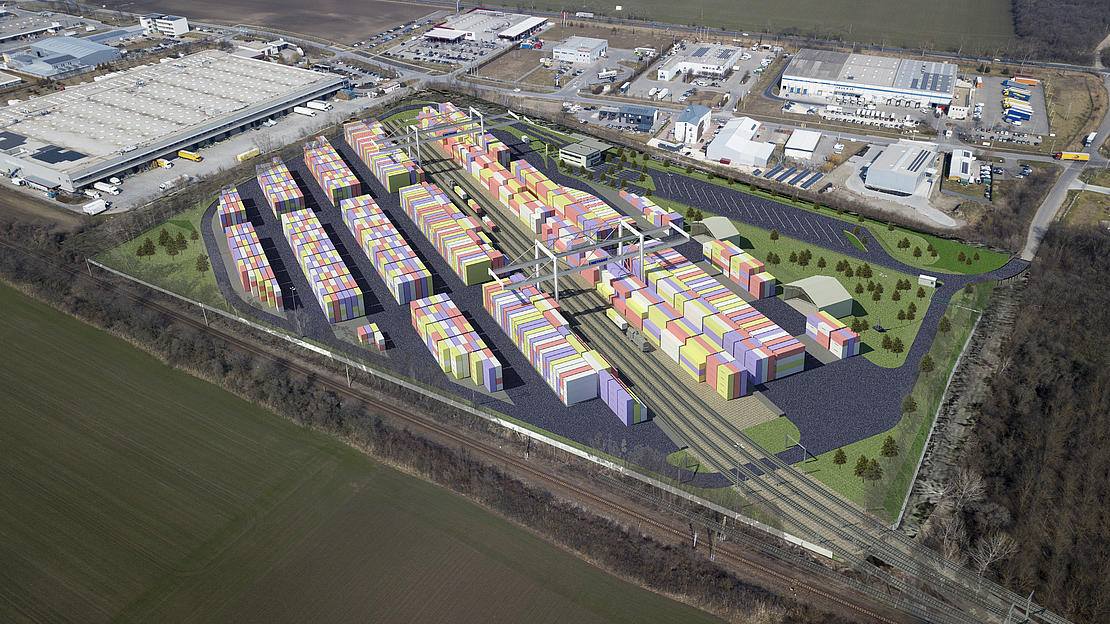
Construction has officially started on a new intermodal logistics hub of European significance in Szeged with a ceremonial groundbreaking event. The second hinterland terminal of HHLA's rail subsidiary METRANS in Hungary is set to begin operations in 2027, further strengthening Hungary’s role in European supply chains and enhancing the competitiveness of both the region and the country.
The ceremonial groundbreaking of METRANS Group’s second Hungarian container terminal in Szeged was attended by Péter Szijjártó, Minister of Foreign Affairs and Trade; István Joó, Government Commissioner, CEO of Hungarian Investment Promotion Agency (HIPA); László Botka, Mayor of Szeged; and Peter Kiss, CEO of METRANS Group.
The Szeged terminal, expected to start operations in 2027, will complement METRANS Group’s Hungarian network, alongside its Budapest terminal operating since 2017. As the southern gateway of the country, the Szeged intermodal hub will form a new logistics pole, enabling Hungary to become a leading player in the corridor connecting Central Europe with the Balkans. The METRANS terminal will be built on nearly 10 hectares, featuring, among other facilities, four 330-meter loading tracks and two remote-controlled, state-of-the-art electric gantry cranes to ensure fast, safe and sustainable handling of goods. The terminal will be capable of handling six train pairs daily and an annual container volume of 300,000 TEU.
Peter Kiss, CEO of METRANS: “The launch of construction for our second Hungarian terminal is a significant step that reflects our long-term commitment to the future rail and intermodal logistics development. Years of collaboration and shared achievements have made Hungary far more than just an investment location for METRANS. The expected growth in international freight flows, strong domestic investments and the supportive business environment create highly favorable conditions for further joint development.”
New terminal to attract further investments
The Szeged container terminal will serve as a key intermodal hub in the Southern Great Plain region, connecting local industrial and commercial flows with broader European maritime and inland trade networks. Beyond meeting existing logistics needs, the terminal will help attract additional investments to the region by offering efficient rail and road connections – especially in sectors such as manufacturing, automotive, electronics, fast moving consumer goods (FMCG) and e-commerce.
New jobs and positive social impact
Beyond strengthening the region’s economic potential, the new terminal development will deliver significant social benefits. It will help relieve road congestion, reduce traffic on the M5–M43–55 road corridor and in surrounding towns, thereby improving quality of life and road safety in the region. The investment will create new jobs and generate further supplier partnerships, boosting local employment and competitiveness.
Carbon-neutral, green logistics
Gradually shifting freight transport from road to rail carries significant environmental benefits. METRANS’ key goal across Europe and Hungary is carbon-neutral, green logistics. The company’s container terminals and rail operations use cutting-edge technologies to ensure maximum efficiency with minimal environmental impact. The company’s rail network will connect Szeged with major European destinations, making low-emission transport more accessible to regional businesses. The terminal’s operation will prevent tens of thousands of tons of CO₂ emissions annually, in line with national and EU objectives.
METRANS Group is one of Europe’s leading rail logistics providers and a subsidiary of HHLA (Hamburger Hafen und Logistik AG), specializing in intermodal container transport. Its core activity is the rail transport and distribution of maritime container goods between ports and inland destinations across Europe. METRANS currently operates 20 inland container terminals in 13 countries, all connected by daily rail services to each other and to major Adriatic and North Sea ports. The Group also owns its own rail company, operating 650 container trains weekly, and employs nearly 3,000 people across Europe.
Share this page on


