22.06.2026
Climate-neutral research project in Hamburg’s Speicherstadt receives triple award
A research project aimed at providing a climate-neutral energy supply for Hamburg’s Speicherstadt district has won three awards in the Sustainability Challenge 2026, organised by the German Sustainable Building Council (DGNB). The ‘research warehouse’ in warehouse block H won the ‘Research’ category prize, the special ‘Climate Protection’ prize, and the People’s Choice Award.
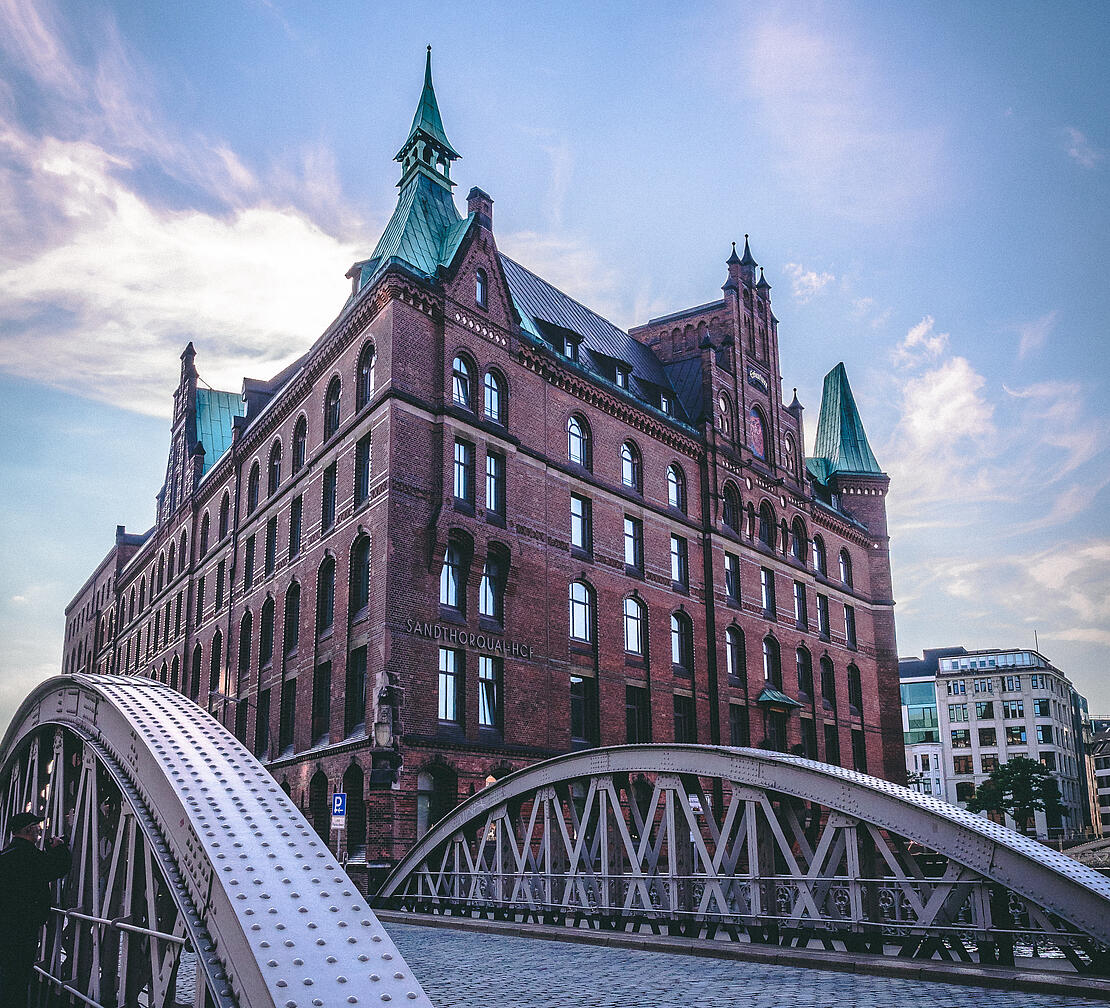
Every year, the DGNB presents awards to construction and property projects that make a significant contribution to sustainable transformation. Out of around 130 entries, the Speicherstadt project made it through to the final, impressing both the expert jury and the public. The team behind the 'CO₂-neutral World Heritage Site: Speicherstadt Hamburg” took to the stage no fewer than three times at the awards ceremony on 17 June 2026. Not only did the project take first place in the “Research” category, it also received one of two special climate prizes. It also received the People’s Choice Award. This award is determined by an equal combination of an online vote held before the event and a live vote at the DGNB Sustainability Day.
The award-winning project addresses the question of how historic, listed buildings can be supplied with locally generated, climate-neutral energy in the future. Over the past few years, a technical approach based on the use of ambient heat has been tested under the scientific leadership of Prof. Harald Garrecht (University of Stuttgart, Institute for Materials in Construction).
The practical results became apparent last winter when the research workshop in Block H was reliably heated for more than five weeks, during which time temperatures remained below freezing, using only heat recovered from the roof. This project therefore provides concrete evidence that innovative energy concepts can be implemented, even within the sensitive context of a UNESCO World Heritage Site.
“We are particularly pleased that both the expert jury and the public have recognised the project. This shows that these approaches are highly relevant for the future of historic urban neighbourhoods,” says Peter Modlich, project manager at HHLA Immobilien responsible for the research project.
“The Speicherstadt has been a fascinating neighbourhood for 140 years. The ongoing regeneration of the blocks is saving a huge amount of resources. If this project also reduces operational emissions, the Speicherstadt will be fit for the future while building on its historical foundations,” says Danny Maskow, neighbourhood manager of the Speicherstadt.
HHLA Immobilien is the project initiator and coordinator. Participants include the University of Stuttgart, RWTH Aachen University, HafenCity University Hamburg (HCU), the Ministry of Culture and Media, the Ministry for the Environment, Climate, Energy and Agriculture (BUKEA), and numerous other partners from the worlds of research and practice. The project has been funded by the Federal Ministry for Economic Affairs and Energy.
The project is part of the overall development of the Speicherstadt district. It is successfully being steered into the future as the multifaceted commercial district it has been for 140 years. The regeneration of the Speicherstadt conserves resources, preserves architectural heritage, and creates unique working environments.
Share this page on


